Have Query ? Reach Out Us!

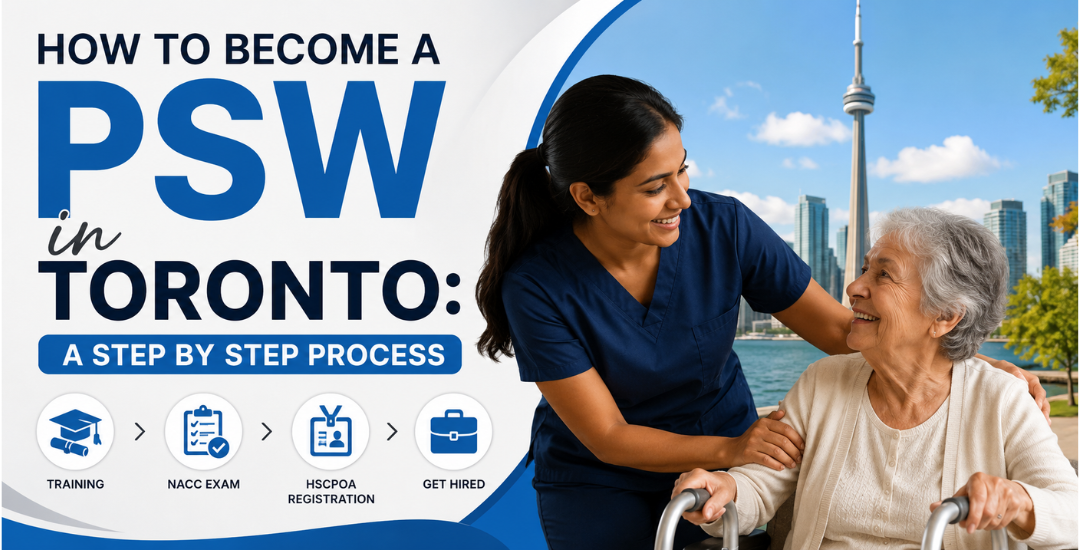
How to Become a PSW in Toronto
You can go from zero experience to a hired Personal Support Worker in Toronto in under eight months, and the field is hungry for you. Ontario's aging population and chronic staffing shortages mean many PSW graduates get job offers during their placement, before they even finish the program. Knowing how to become a PSW in Toronto is really about following a clear sequence and not tripping over the one or two steps that changed in 2026. This guide walks you through every stage, including a new registration requirement most older articles completely miss.
So here is the full path, step by step, with the real requirements, timelines, and the mistakes that slow people down.
A Personal Support Worker helps people with the daily activities that age, illness, or disability make difficult. Bathing, dressing, mobility, feeding, medication reminders, and companionship. Real, hands-on care that keeps vulnerable people safe and dignified.
PSWs work across long-term care homes, hospitals, retirement residences, and private homes through community care agencies. Toronto concentrates more of these employers than anywhere else in Canada, and demand keeps climbing. That translates into fast hiring and genuine job security, which is why so many career changers pick this route.
Before anything else, confirm you qualify for a PSW program. Most Toronto colleges ask for similar things.
You generally need an Ontario Secondary School Diploma (OSSD) or equivalent. Studied outside Canada? Your transcripts usually just need an admissions review. Many career colleges also accept mature student status, meaning you are 18 or older and can pass an admissions assessment even without finishing high school. The NACC pathway typically expects completion of Grade 12 or a passing score on a technical literacy and Wonderlic assessment.
Do not let a missing diploma stop you. The mature student route exists precisely so capable adults are not shut out.
This is the decision that shapes everything after it, so choose carefully. Not every PSW program is equal.
Pick a program that follows Ontario's official 2022 PSW training standard and, ideally, is accredited by the National Association of Career Colleges (NACC). Accreditation matters because the NACC sets the curriculum and runs the certification exam that employers across Ontario recognize. A program outside this standard can leave you with a certificate employers do not trust.
A full-time PSW course in Toronto usually runs about 24 to 34 weeks. Look for three things beyond accreditation: a real clinical placement, clear total fees, and post-graduation job support. Miss the placement especially, and you lose the single best source of your first job offer.
The program itself blends classroom theory with hands-on practice. You learn anatomy, personal care, infection prevention, safe transfers, communication, and client support, then apply it under supervision.
The clinical placement is the part that turns a student into a hireable graduate. You work with real clients in an actual care setting, often a long-term care home or hospital, building the confidence and references employers want. Treat placement as an extended job interview, because that is frequently what it becomes.
Here is a detail that surprises people searching for an exam date: there is no single national sitting. The NACC PSW exam is tied to your college program and scheduled near the end of it, so different colleges run it on different dates throughout the year.
You do not register for it yourself. Because the exam connects to a NACC-member college's curriculum, your school books it for you. The test is multiple choice and confirms you have met the national competency standard. Passing it earns you the NACC PSW certificate, which many Ontario employers specifically ask to see. If your goal is simply to challenge the exam, you still have to enroll in a NACC-member program first, since you cannot write it separately.
This is where 2026 changed the game, and why you should pay more attention here:
For years, Ontario PSWs worked without a formal regulatory body. Anyone who completed an approved program could call themselves a PSW, and there was no public registry to verify credentials. That has shifted. The Health and Supportive Care Providers Oversight Authority (HSCPOA) now provides official registration for Ontario PSWs, with a public registry employers can check .
The HSCPOA created four registration pathways for different backgrounds. The most direct one applies if you graduated from a NACC-accredited PSW program and passed the NACC exam. Other pathways recognize provincially approved programs completed on or after July 1, 2014, or existing work experience as a PSW. Requirements, fees, and deadlines can change, so always confirm the current details on the official HSCPOA website before applying. Getting registered signals to employers that your credentials are verified, which increasingly matters in Toronto's hiring market.
With your certificate and registration in hand, you are ready to work. Toronto's demand does the rest.
PSW wages in the region typically range from roughly $18 to $28 an hour depending on setting, with hospital and unionized long-term care roles at the higher end, often adding shift premiums and benefits. Watch for incentives too. Programs like the HealthForceOntario grant have offered recent PSW graduates a $5,000 incentive in exchange for a six-month commitment to an eligible long-term care or home care employer. Ask your college's job support team which incentives are active when you graduate.
Here is what quietly costs people time and money: assuming the cheapest or fastest program is automatically the smartest choice, or that any PSW course leads to the same result.
A program that skips the 2022 provincial standard, lacks NACC accreditation, or offers a weak placement can leave you unhireable at major employers and unable to take the direct HSCPOA registration pathway. The few hundred dollars or few weeks you saved upfront get erased by a harder job search. Vet accreditation, placement structure, total fees, and post-graduation support before you enroll anywhere. That single habit protects your whole investment.
Partly, yes. Many Toronto colleges now offer hybrid PSW programs where the theory runs online and the hands-on labs and clinical placement happen in person.
Fully online PSW training is not realistic, because personal care is a physical skill that requires supervised practice on real people. A quality hybrid program gives you flexibility for the classroom portion while keeping the practical training that makes you competent and hireable. If a program claims you can become a fully qualified PSW without any in-person placement, treat that as a warning, not a convenience.
Becoming a PSW in Toronto follows a clear path: meet the admission requirements, enroll in an accredited program, complete your coursework and placement, pass the NACC exam, register with the HSCPOA, and get hired. Do it right and you can be working in a stable, in-demand career in well under a year.
At TAHA College, our PSW program is built around the Ontario 2022 standard, with hands-on training, supervised clinical placement, NACC exam preparation, and real job support to guide you from enrollment to employment. Small classes and experienced instructors mean you are never just a number.
Speak with an admissions advisor today, and we will map out your start date, fees, placement, and certification path in one straightforward conversation. Your first step toward a PSW career is a single phone call.
Q1: How long does it take to become a PSW in Toronto?
A full-time PSW program in Toronto typically takes about 24 to 34 weeks, including classroom learning and supervised clinical placement. Part-time and hybrid options may run longer but offer more flexibility.
Q2: What qualifications do I need to enroll in a PSW course?
Most colleges require an Ontario Secondary School Diploma or equivalent. International transcripts are reviewed, and many career colleges accept mature student status for applicants 18 or older who pass an admissions assessment.
Q3: Do I need to pass the NACC exam to become a PSW?
For NACC-accredited programs, yes. The NACC certification exam confirms you meet the national competency standard and earns the NACC PSW certificate that many Ontario employers require. Your college schedules the exam for you.
Q4: What is the HSCPOA and do I have to register?
The Health and Supportive Care Providers Oversight Authority is Ontario's registration body for PSWs, with a public registry employers can check. Registration verifies your credentials and is increasingly expected by Toronto employers. Confirm current requirements on the official HSCPOA site.
Q5: How much do PSWs earn in Toronto?
PSW wages in Toronto generally range from about $18 to $28 per hour depending on the setting. Hospital and unionized long-term care roles pay at the higher end and often add shift premiums and benefits.
Q6: Can I become a PSW fully online?
No. The theory portion can be online in a hybrid program, but personal care is a hands-on skill requiring supervised in-person labs and clinical placement. Be cautious of any program promising full qualification with no placement.
Q7: Is there financial help for PSW training?
Eligible students may access OSAP and, at times, government incentives. Programs like the HealthForceOntario grant have offered recent graduates a $5,000 incentive for a six-month commitment to an eligible employer. Ask your college which supports are currently active.
Q8: Is PSW a good career choice in 2026?
Yes, for people who enjoy caring for others. Demand in Toronto is strong, training is short and affordable, and job security is high. The work is physical and emotionally demanding, so it suits those genuinely drawn to care work.
Have a Question? Ask Us!
Related Blogs














.png 1.png "https://www.tahacollege.ca/storage/blog/1755679660-Untitled (720 x 540 px).png 1.png")














.png "https://www.tahacollege.ca/storage/blog/1755606017-Untitled (720 x 540 px).png")





.png "https://www.tahacollege.ca/storage/blog/1757745482-psw skills (1).png")