Have Query ? Reach Out Us!


Online PSW Course Mississauga
Online PSW Course Mississauga – Career Guide for Students
The healthcare industry in Canada continues to grow rapidly, and with this growth comes the increasing demand for trained caregivers. Many students and immigrants are seeking a stable, meaningful career that offers job security and allows them to contribute positively to society. This is why the personal support worker (PSW) field is now one of the fastest-growing career options.
If you live in or near Mississauga and are interested in entering the healthcare field, an online PSW course in Mississauga is a very practical and flexible option. With online learning, students complete their theory from home, study on their own schedule, and then complete their practical training for real-world experience.
Many people believe that starting a career in the healthcare field is too difficult or too expensive. However, with the right training organisation and a structured program, this journey can be straightforward. This is why educational institutions such as Taha College offer students structured training, career-planning services, and hands-on experience to help them enter the healthcare industry with confidence.
What Is a Personal Support Worker
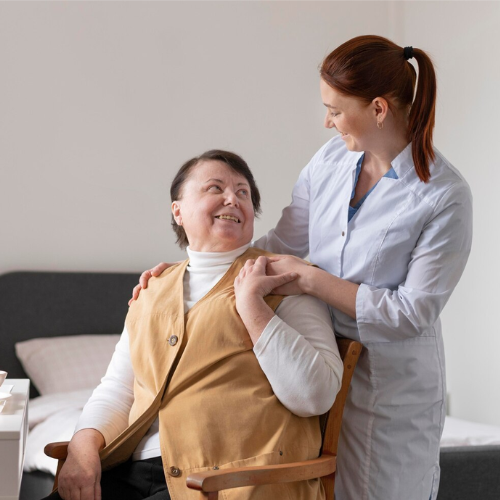
A personal support worker is a healthcare professional trained to assist older people and people with disabilities with their daily activities.
In simple terms, a PSW's work is to ensure patients are well cared for in their daily activities.
PSW Responsibilities
These include:
• Assisting patients in maintaining personal hygiene
• Assisting patients in bathing, dressing, and grooming
• Assisting patients in preparing meals and feeding them
• Reminding patients to take their medication
• Assisting patients in walking and carrying
• Providing emotional support to patients
• Assisting patients in their progress
PSWs work in various places, including hospitals, nursing homes, rehabilitation centres, and homes.
The work of PSWs is very important in the healthcare system. This is because PSWs spend more time with patients.
Why the Demand for PSWs Is Increasing in Mississauga
As we all know, there has been a high demand for personal support workers (PSWs) in Mississauga's and Ontario's healthcare systems in recent years. Hospitals, long-term care homes, and home care agencies are currently in high demand for trained caregivers. Demand is not going away; rather, it will continue to rise with population growth, the shortage of healthcare employees, and patient care needs.
Below are some of the main reasons for the increasing demand for PSWs in Mississauga.
1. Ageing Population in Canada
Canada is experiencing rapid population ageing. Statistics indicate that millions of Canadians are in the 65+ age group. Moreover, population ageing will continue in the coming decades.
As the ageing population grows, the need for Healthcare will rise. The specific areas where the need for Healthcare will increase include:
• Mobility Assistance
• Chronic Disease Care
• Daily Personal Care
Senior citizens need assistance with daily living, including bathing, dressing, mobility, and medication reminders. PSWs provide all these services.
Therefore, the need for PSWs will continue to increase in growing cities like Mississauga.
2. Growing Preference for Home Care
Senior citizens are increasingly preferring home care to hospital and nursing home care. Research has clearly shown that most senior citizens prefer "ageing in place."
There are many reasons why the ageing population prefers home care:
• Senior citizens feel at home in their own environment.
• Family members prefer home care for the ageing population.
• Home care is more cost-effective for the healthcare system.
However, running home care requires trained caregivers, and PSWs play a vital role in this area.
3. Healthcare Worker Shortage
There is currently a shortage of healthcare workers in Ontario. This has been attributed to the fact that in the coming years, thousands of PSWs will be required in the healthcare sector.
An analysis concluded that by 2027, the province of Ontario would require an additional 51,900 PSWs. However, the supply of PSWs is not enough. This is attributed to:
• Increased workload in hospitals
• Increased staff pressure in long-term care homes
• Employers are currently recruiting new PSW graduates.
Therefore, the need for PSW training courses is increasing.
4. Rising Chronic Health Conditions
Due to modern lifestyle changes and an increase in the ageing population, people are suffering from various health complications.
Common health conditions include:
• Diabetes
• Heart Diseases
• Arthritis
• Dementia
• Cancer Recovery Support
Millions of adults in Canada suffer from various health complications. This has led to an increase in the need for long-term Healthcare.
PSWs help patients with their daily activities, such as:
• Medication Reminders
• Mobility Assistance
• Nutrition Support
• Emotional Care
This has made the role played by PSWs in the healthcare sector even more important.
5. Expansion of Long-Term Care Facilities
The Ontario government is placing significant emphasis on expanding long-term care facilities.
Residents in long-term care facilities need the following services:
• Daily cleaning assistance
• Mealtime assistance
• Mobility assistance
• Health monitoring
PSWs mostly handle these tasks. When new facilities open or beds increase, the number of PSWs required will increase.
6. Faster Entry into the Healthcare Workforce
Becoming a doctor or a nurse in the field of Healthcare requires a long period of education.
Why:
• International Students
• Career Changers
• Newcomers to the field of Healthcare
choose to pursue a PSW program.
Students can gain faster entry into the workforce after a short period.
7. Growing Job Opportunities in Many Healthcare Settings
One of the most attractive benefits of a PSW profession is that it is not limited to only hospitals.
PSWs can work in:
• Hospitals
• Nursing Homes
• Rehabilitation Centers
• Home Care Agencies
• Private Homes
The more the facilities expand, the greater the need for PSWs.
Benefits of Choosing an Online PSW Course
Healthcare education used to be conducted in classrooms, but with the rise of digital learning, many institutes now offer online and hybrid learning options. Online PSW courses in Mississauga have become a practical and flexible learning option for students looking to pursue a healthcare career in the city or its surrounding areas.
The advantage is that students can manage their studies alongside their other responsibilities. This model is convenient for working professionals, parents, or students considering a career change. In this format, students complete theory online and receive practical skills training in a real healthcare setting.
1. Flexible Study Schedule
The biggest advantage of online courses is that one can attend lectures at one's own convenience. One can even attend lectures after watching recordings. This is an opportunity for those working full-time or busy with family commitments.
2. Balancing Work and Study
Most students who take online courses work part-time. Earlier, it was difficult to balance time in offline courses. But in online courses, one can plan their time as they see fit. This is helpful for those who want to change their careers.
3. Learning from Anywhere
One of the biggest advantages of online learning is its flexibility in terms of location. The students do not have to travel to the campus daily. If they stay in Mississauga or nearby cities, they can easily have access to the PSW course program in Mississauga.
4. Access to Digital Learning Resources
Online courses allow students to access different learning resources, including:
• Recorded lectures
• Downloaded notes
• Online assignments
• Quizzes
This enables students to revise different topics as many times as they want, thereby helping them better understand.
5. Comfortable Learning Environment
Different students have different learning styles. Some feel pressured in the classroom, but online learning enables them to study in a comfortable learning environment. Studying at home enables students to study at their own pace.
What You Will Learn in a PSW Training Program
It is not a matter of theory. The PSW training program has practical applications in the real world of Healthcare.
Key Subjects in a PSW Course
• The various modules of a PSW course may include:
• Human Anatomy and Basic Healthcare Knowledge
• Infection Prevention and Safety Practices
• Personal Care Techniques
• Mental Health Awareness
• Interaction with Patients and Families
• Nutrition and Meal Planning
• Mobility and Patient Handling Techniques
Practical Training
The course may also include practical training in real healthcare facilities.
This training would include:
• Real patient care situations in today's world
• Working with healthcare teams
• It would also help to build confidence.
Real Problems Students Face When Choosing a PSW Course
Getting started in your healthcare career can be an incredible experience; however, selecting a PSW training program presents a variety of real-world problems for students. There are many courses available online; however, differences in course structure and quality, as well as in career support, leave students questioning which course will best suit their career goals.
A student searching for online PSW courses here in Mississippi will find dozens of options, but many will not be reliable or career-oriented. Turning to the previously mentioned information can help students make informed decisions.
1. Too Many Online Course Options
In recent years, many PSW courses have become available online. Every organisation claims that its course is the best. This is confusing for students.
Students generally face the following problems:
• What is the course duration?
• Does it include practical training?
• Is the course certified or not?
There is insufficient information. This is making it difficult.
2. No Practical Training
In the healthcare industry, it is not enough to just know the theory. Practical training is necessary.
Some courses offer online theory. However, there is insufficient practical training. As a result, even after completing the course, the student does not feel confident.
3. Fear of Working in Healthcare
Many students wish to pursue a course in the healthcare sector. However, there is concern about patient care.
Generally, students face the following problems:
• Fear of caring for the elderly.
• Fear of medical situations.
• Fear of emotional stress.
These fears arise if proper guidance is not provided.
4. Difficulty in Managing Time
Most of the students who wish to pursue a PSW course are already employed or have family commitments.
For traditional classroom-based courses, time is a constraint, and time management is a problem.
How Taha College Supports PSW Students
Taha College offers PSW students a nurturing educational setting that fosters the development of both theoretical knowledge and useful healthcare skills. The college's main goal is to prepare students for real-world healthcare scenarios so they may start their jobs with confidence. Students who enrol in Mississauga's online PSW programs benefit from structured instruction, knowledgeable teachers, and career counselling, which facilitate a seamless transition into the medical field.
The main ways Taha College helps PSW students are listed below.
1. Hands-On Practical Training
Practical knowledge plays a vital role in the healthcare sector. Therefore, Taha College has emphasised hands-on training for its PSW program.
During the course of training, the students:
• Have the opportunity to gain an understanding of patient care scenarios in real-life situations
• Have the opportunity to gain experience in working with healthcare professionals.
• Gain confidence through practical training in a clinical setting.
This kind of training prepares students for real-life healthcare settings.
2. Industry-Focused Curriculum
The PSW curriculum has been developed with input from healthcare professionals and meets industry needs.
Students have the opportunity to gain knowledge in the following practical skills during the course of the PSW program:
Personal care skills
• Infection control and safety procedures
• Communication skills with patients
• Support planning for clients
3. Personalised guidance from the instructors
Every student's educational path is unique in its own right. Thus, the instructors at Taha College offer students personalised guidance and mentorship.
The role of the faculty is;
• To help the student understand the course concepts
• To help the student prepare for the training
• To help the student gain confidence in the workplace
This is particularly useful for new students in the healthcare industry.
4. Recognised Certification and Industry Standards
The PSW program is developed in compliance with industry standards and in collaboration with healthcare industry associations.
The advantages of this are:
• Students gain a recognised certification
• Students gain credibility with employers.
• Students can easily find job opportunities in the healthcare industry.
5. Strong Healthcare Partnerships
Taha College also has a relationship with local healthcare organisations. This relationship enables the school to provide its students with exposure to real-world Healthcare.
The benefits that the school enjoys from the relationship include:
• Students get to experience real-world Healthcare
• Networking in the industry is possible.
• Students' chances of getting a job after graduation increase
Students can access the healthcare industry through this relationship.
Career Opportunities After Completing a PSW Course
Once PSW certification is achieved, there are many opportunities available in the job market.
Common Job Roles
• Personal Support Worker
• Home Support Worker
• Patient Care Assistant
• Community Care Worker
• Nursing Home Support Staff
Workplace
PSWs can work in different types of workplaces in the healthcare industry:
• Hospital
• Long-Term Care Facility
• Private Home
• Rehabilitation Center
• Assisted Living Community
With the constant need in the healthcare industry, a PSW job is stable.
Frequently Asked Questions
What is the duration of a PSW course?
Depending on the course design, PSW training programs usually last six months to a year.
Can I enrol in an online PSW course?
Indeed, some educational institutions provide hybrid or online learning methods that combine online theory instruction with hands-on training in medical facilities.
Is working as a PSW in Canada a good career choice?
Indeed, PSWs are essential to the healthcare industry, and there is a growing need for qualified caregivers in Canada.
Are PSWs exclusively employed in hospitals?
No, PSWs work at community health centres, nursing homes, and home care in addition to hospitals.
What abilities are necessary for a PSW?
Among the necessary abilities are the following:
• Patience and empathy
• Communication abilities
• Physical endurance
• Paying close attention to details
• Collaboration
Summary
It is not just a job when you choose a career in the healthcare industry. It is a responsibility. A personal support worker makes a significant contribution to the patient's comfort.
The healthcare industry in Canada is experiencing rapid growth, leading to increased demand for trained personal support workers (PSWs), especially in Mississauga. Many students and immigrants are drawn to this field due to job security and the opportunity to contribute to society. Online PSW courses in Mississauga offer a practical, flexible pathway for aspiring healthcare workers, allowing them to study theory from home while gaining practical experience.
PSWs play a crucial role in assisting older adults and individuals with disabilities with everyday activities, including personal hygiene, meal preparation, medication reminders, emotional support, and mobility assistance. Several factors drive the demand for PSWs in Mississauga:
1. Ageing Population: With millions of Canadians aged 65 and over, the need for healthcare services is escalating, particularly in areas like mobility assistance and chronic disease care.
2. Preference for Home Care: Many seniors prefer aging in place, prompting a rise in the demand for home caregivers, where PSWs are essential.
3. Healthcare Worker Shortage: Ontario faces a critical shortage of healthcare workers, requiring an additional 51,900 PSWs by 2027, due to pressures in hospitals and long-term care facilities.
4. Chronic Health Conditions: An increasing incidence of health issues, such as diabetes, heart disease, and dementia, necessitates long-term care, further emphasizing the role of PSWs.
5. Expansion of Long-Term Care Facilities: The Ontario government's investment in long-term care prompts a continuous need for more PSWs to provide essential services.
6. Faster Entry into the Workforce: PSW training allows quicker access to employment compared to more extended medical training paths.
7. Diverse Job Opportunities: PSWs can find employment across various settings, including hospitals, homes, and nursing facilities, increasing their job prospects.
The flexibility of online PSW courses caters to working professionals, students, and career changers, allowing them to balance study and work effectively. Key benefits of online education include a flexible study schedule, the ability to learn from anywhere, and access to a plethora of digital resources for revision. This education model is particularly advantageous for those in the Mississauga area as it accommodates multiple responsibilities while preparing them for a rewarding healthcare career.
Colleges and other institutions provide students with the right kind of training and environment so they can be confident in choosing a career in the healthcare industry.
A PSW career has the potential for growth and making a positive impact on society.
Have a Question? Ask Us!
Related Blogs

.png 1.png "https://www.tahacollege.ca/storage/blog/1755679660-Untitled (720 x 540 px).png 1.png")


















.png "https://www.tahacollege.ca/storage/blog/1755606017-Untitled (720 x 540 px).png")

.jpg "https://www.tahacollege.ca/storage/blog/1757317716-customer service blog-min (1).jpg")
.png "https://www.tahacollege.ca/storage/blog/1757745482-psw skills (1).png")